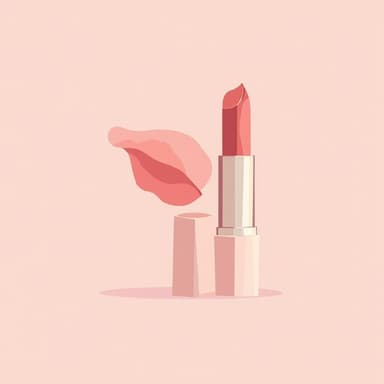
Lip Tint vs Lipstick: Which One Actually Suits Your Day?
You've been standing in the makeup aisle for ten minutes, a lip tint in one hand and a classic lipstick in the other, wondering which one will actually survive your morning coffee and afternoon meeting. You're not alone — and the answer isn't as simple as one being better than the other.
In this post you'll get a side-by-side breakdown of how these two formulas differ in texture, wear time, finish, and real-day comfort. By the end you'll know exactly which one to reach for before you walk out the door — and when you might want both in the same look.
{{HERO_IMAGE}}The quick version: lip tint vs lipstick at a glance
Before we go deep, here is the landscape in plain terms. Lip tint and lipstick solve different parts of the same problem — adding color to your lips — but they do it in almost opposite ways.
| Factor | Lip Tint | Lipstick |
|---|---|---|
| Coverage | Sheer to medium | Medium to fully opaque |
| Finish | Stain, satin, or sheer gloss | Matte, satin, cream, or gloss |
| Texture | Lightweight, watery to oily | Emollient, creamy, or powdery |
| How it wears | Stains the lip skin; fades evenly | Sits on the surface; may feather or fade in patches |
| Typical wear time | 4–8 hours | 2–5 hours (long-wear formulas longer) |
| Best for | Natural looks, dry lips, on-the-go | Bold looks, formal events, precise application |
| Lip liner needed? | Usually not | Often, especially with matte or bold shades |
| Typical price on Amazon | $8–$22 | $10–$30 |
What actually is a lip tint — and what it isn't
A lip tint is a lightweight lip color that delivers a wash of pigment and then sets into the surface of your lips, much like a fabric stain sets into linen. The color literally bonds with your lip skin rather than sitting on top of it, which is why it fades so evenly. You will notice the color slowly lighten rather than flake off at the center while a ring of pigment remains at the edges.
Most lip stain formulas on Amazon today fall into two camps: water-based stains that feel very light and dry quickly, and oil-based tints that have a slight glossiness and feel more like a hybrid between a balm and a stain. The water-based versions tend to be more buildable; the oil-based ones are more comfortable on dry lips. Either way, you are looking at something that re-applies in seconds because there is no need for a mirror or careful edge work.
I will be honest — I was skeptical of lip tints for years because a couple of early formulas I tried in college felt like sandpaper once they dried. The game changed when I tried a gel-texture tint that stayed comfortable for six hours. The lesson: not all tints are equal, and the texture makes or breaks the experience.
What actually is a lipstick — the classic we keep coming back to
Lipstick is the product most of us grew up watching our mothers and older sisters apply. It is a concentrated blend of wax, oils, pigments, and emollients pressed into a bullet or poured into a tube. That formula gives it the ability to deliver true color opacity — you can fully change the appearance of your lips with a single swipe.
The trade-off is that lipstick sits on the surface of your lips rather than bonding with the skin. This means it is more vulnerable to transferring onto coffee cups, masks, and the rim of a wine glass. It also means the color can separate over time: the oils migrate, leaving the pigment behind in a patchy ring.
Modern lipsticks come in several finishes that behave quite differently from each other. A matte lipstick feels dry and flat but tends to last longer than a cream formula. A satin lipstick has more slip and shine without the full gloss. A moisturizing lipstick — often labeled as a sheer orlacquer — delivers color with a glossy, comfortable feel that many people with dry lips prefer over traditional matte.
How they wear: 4-hour and 8-hour real-world durability
Here is where the comparison gets practical. I have worn both types through a full workday, a gym session, two cups of black coffee, and a salad for lunch. Here is what tends to happen.
Lip tint after 4 hours: The color has softened but is still present — not gone, not patchy. On my lower lip, which I bite without realizing it, there is some lightening, but it reads as a natural stained effect rather than obvious wear. I have not touched a mirror.
Lipstick after 4 hours: Depending on the formula, I am either reaching for a blotting tissue to press away the excess shine or noticing that the color at the center of my lips has thinned while the outline remains. With a long-wear matte lipstick I might be untouched. With a standard cream bullet I am due for a reapplication soon.
Lip tint after 8 hours: A faint stain remains — enough that my lips do not look bare, just like I have a naturally rosy lip tone. Some formulas leave a slightly dry feeling if they are on the water-based side. I can reapply on top without any issues.
Lipstick after 8 hours: Unless I used a long-wear formula, the color is largely gone or very patchy. The lipstick has left faint residue on my water bottle, which is always a small disappointment.
Finish showdown: matte, satin, gloss, and stain compared
The word "finish" refers to how the product looks once it sets — the final surface quality your lips display. Finish matters more than most people realize because it interacts directly with your skin tone, your lip texture, and the rest of your makeup.
Stain finish (tint territory): A stain finish is flat and natural-looking, like your lips just a little flushed. It works beautifully for everyday makeup and on mature lips because it does not settle into fine lines the way cream or gloss can. It is also the most forgiving when it fades, because the fade is gradual and even rather than dramatic.
Matte finish (lipstick territory): A matte lipstick delivers bold, even color with zero shine. It photographs well and holds up through eating and drinking better than most other lipstick finishes. The catch is that matte formulas are typically the driest, so if your lips are at all dry or you are in a dry climate, they can emphasize flakiness within an hour of application. If you have very dry lips, a good lip balm underneath — applied at least ten minutes before your lipstick — makes a significant difference.
Satin finish (shared territory): A satin lipstick lands between matte and gloss — smooth, slightly reflective, comfortable. Many people who say they hate lipstick actually love satin-finish formulas. Browse the makeup section and you will find this finish spans both traditional bullet lipsticks and hybrid tint formulas.
Gloss finish (tint territory): Glossy tints give the plumped, wet look without the sticky heavy texture of old-school lip glosses. They reflect light, which can make your lips look fuller. They also tend to transfer more, which matters if you are wearing a mask or will be getting close to people.
The prep factor: lip care before color
No comparison of lip products is complete without acknowledging that what goes on your lips before the color matters as much as the color itself. I learned this the hard way after a weekend shoot where I applied a matte lipstick over barely-there chapped lips. Three hours in, every flake was visible in photographs.
Here is my practical prep routine — and it works for both tints and lipsticks:
- Exfoliate if needed. A soft damp cloth or a gentle sugar scrub once or twice a week keeps the surface smooth. Do this the night before a big event, not right before applying color, because any micro-abrasions will sting.
- Hydrate. Apply a nourishing lip balm at least ten minutes before your color. The waiting period lets the balm absorb enough that it will not compromise the adhesion of your tint or lipstick.
- Blot excess balm. Before you apply color, press your lips gently with a tissue. Too much balm underneath makes lip tint slide and reduces the stain effect.
- Primer for long-wear days. If you are going to a full-event day and want your color to last, a lip primer creates a uniform base that helps both tints and lipsticks adhere more evenly.
Which one to reach for — a situation-by-situation guide
Rather than declaring a winner, here is a practical decision guide based on real scenarios. The best choice is almost always the one that matches your day, not the one with the most impressive-sounding description on the packaging.
Grab a lip tint if:
- You are doing a natural, minimal-makeup day and want a flushed lip without obvious product.
- You have dry or sensitive lips and want color without heavy, drying formulas.
- You have a toddler or school run in your future and do not have time for mid-morning touch-ups.
- You are layering it under or over a lipstick for a blurred-edge effect.
- You want something comfortable enough to forget you are wearing it.
Grab a lipstick if:
- You need bold, opaque color — think a statement red or a deep plum for an evening event.
- You are pairing your lip with a strong eye look and want the two to work in balance.
- You love the ritual of precise application and a matching lip liner.
- You are dressing up for a formal occasion where a tinted lip would look too understated.
- You are working with a specific shade that only exists in a bullet formula.
Skip this if you already know your lip personality
If you have been reaching for the same bold red lipstick every day for years and that is genuinely what makes you feel good, this whole debate probably does not apply to you. No blog post should talk you out of a makeup formula that already works for your life. The tint-versus-lipstick question matters most if you are currently undecided, if your current formula is not delivering on comfort or longevity, or if you are building a new everyday makeup kit from scratch.
That said — if you are someone who keeps a lip product in your bag and never actually uses it because it feels uncomfortable, there is a good chance you chose the wrong category for your lips. A heavy matte lipstick and a high-gloss tube both have their place, but neither belongs in a daily carry if it spends more time in your bag than on your face.
Final thoughts
Lip tint and lipstick are not competitors — they are complementary tools that solve slightly different problems. A good lip tint earns its place in your everyday kit for the days you want color without ceremony. A quality lipstick earns its place for the days you want to say something with your lips before you even speak. The smart move is to know which scenario you are living on any given Tuesday, and let that guide your hand toward the right bullet or wand.
If you are ready to explore specific formulas, start with our curated picks in the makeup section or browse everyday lip glosses and tinted balms we've tested. Both categories overlap with the tint territory and are worth knowing about before you buy.